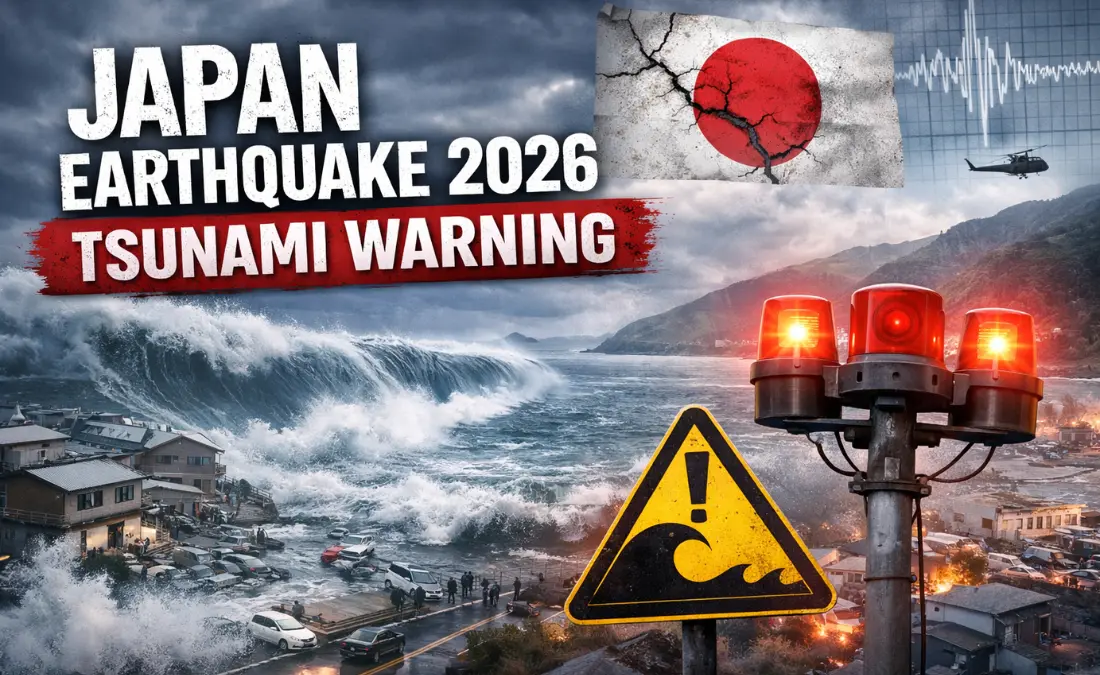
Japan Earthquake 2026 Tsunami Warning: 7.5 Magnitude Quake Triggers Tsunami Warning, Coastal Areas on High Alert
On April 20, 2026, a powerful undersea earthquake measuring around 7.5 magnitude struck off the northeastern coast of Japan, near the Sanriku region. The tremor, recorded at a shallow depth of nearly 10 km, immediately raised alarms due to its potential to generate dangerous tsunami waves. Within minutes, authorities issued an emergency tsunami warning, urging residents in coastal regions to evacuate to higher ground without delay.
The sudden jolt was strongly felt across northern parts of Japan, reminding many of past disasters. While initial reports suggest limited structural damage so far, the real concern remains offshore — where shifting tectonic plates can displace massive volumes of water and trigger deadly waves.
Japan Earthquake 2026 Tsunami Warning: Waves Already Detected
Following the earthquake, Japan’s meteorological agency warned that tsunami waves could reach heights of up to 3 meters (around 10 feet). In some coastal areas, smaller waves between 40 to 80 centimeters have already been observed, signaling that the threat is real and ongoing.
Regions such as Iwate, Aomori, and Hokkaido are considered most vulnerable at the moment. Authorities have emphasized that tsunami waves often arrive in multiple surges, meaning the first wave may not be the strongest. This makes the situation particularly dangerous for anyone returning too early to coastal zones.
Emergency Response and Safety Measures
The Japanese government acted swiftly, setting up an emergency response task force shortly after the quake. Public announcements were broadcast across television, radio, and mobile alerts, instructing residents to move to safer locations immediately.
High-speed rail services, including the famous Shinkansen, were temporarily halted in affected regions as a precaution. Ports were cleared, and ships were moved away from harbors to minimize potential damage from incoming waves.
Local authorities are closely monitoring nuclear facilities to ensure safety, though no major issues have been reported so far.
Why Japan Faces Frequent Earthquakes
Japan’s vulnerability to earthquakes is largely due to its position along the Pacific Ring of Fire, one of the most seismically active zones in the world. This region is home to multiple tectonic plate boundaries, making earthquakes a frequent occurrence.
The current event has inevitably drawn comparisons to the devastating 2011 Japan Earthquake and Tsunami, which caused widespread destruction and loss of life. While today’s situation is still developing, Japan’s advanced early warning systems and preparedness measures are expected to play a crucial role in minimizing damage.
Current Situation: Ongoing Risk
As of now, authorities continue to monitor wave activity and seismic aftershocks. Coastal residents have been strongly advised to remain in safe zones until the warning is officially lifted.
Even though initial tsunami waves have been relatively small in some areas, experts caution that larger waves could still follow. Emergency teams remain on standby, and evacuation centers have been activated across multiple regions.
What People Should Do Right Now
Residents in affected areas are being urged to stay alert and follow official guidance. Moving to higher ground, avoiding coastal areas, and staying updated through official channels are critical steps during such emergencies.
Tsunamis can be unpredictable, and even a few minutes of delay can be dangerous. Authorities stress that safety should be the top priority until all warnings are cleared.
Also Read: –
Most beneficial Credit Cards for the Students in 2026
New Electric Vehicle Toyota bZ7 Recently launch in china, know the details here:
Conclusion
The April 2026 earthquake serves as another reminder of how quickly natural disasters can unfold. While Japan remains one of the most prepared nations for such events, the situation is still evolving, and caution is essential. With tsunami risks still present, the coming hours will be critical in determining the full impact of this powerful quake.